

Sanctuary
Reflections on Home

The concept of “home” is deeply personal yet profoundly universal. A space not only of physical shelter, but of identity formation, shared memory, and emotional belonging.
Sanctuary: Reflections on Home is a curatorial project I’m presenting at UMBRELLA Art Fair, from Nov 15-17 in DC’s Union Market District. It brings together artists from diverse backgrounds, each of whom contributes unique insights into these layered meanings of home. In a world where displacement, migration, and cultural transformation are constant, the idea of home emerges as both a comforting refuge and a space of complex affections. Through mediums like painting, drawing, collage and ceramics, Sanctuary invites us to reflect on what it means to have a place, to root oneself, and to carry home within us.
Although this exhibition was already underway, I write this brief essay in the wake of the 2024 US General Election, an event that has sparked fears, stirred a range of emotions, and raised deep questions about home, safety and belonging—belonging in my country, belonging in my culture, belonging in my body…
In this climate, the themes explored in this exhibition feel particularly urgent. "Home" is not a given; it’s a vulnerable space and a notion in flux. Questions of belonging echo in both private spaces and the broader social landscape. This exhibition, then, becomes more than a reflection; it’s a conversation on what it means to find and redefine home in times that are anything but certain. Through the works of these artists, I invite viewers to examine their own experiences, to connect across shared doubts and hopes, and to reimagine home as a space of resilience and solidarity.
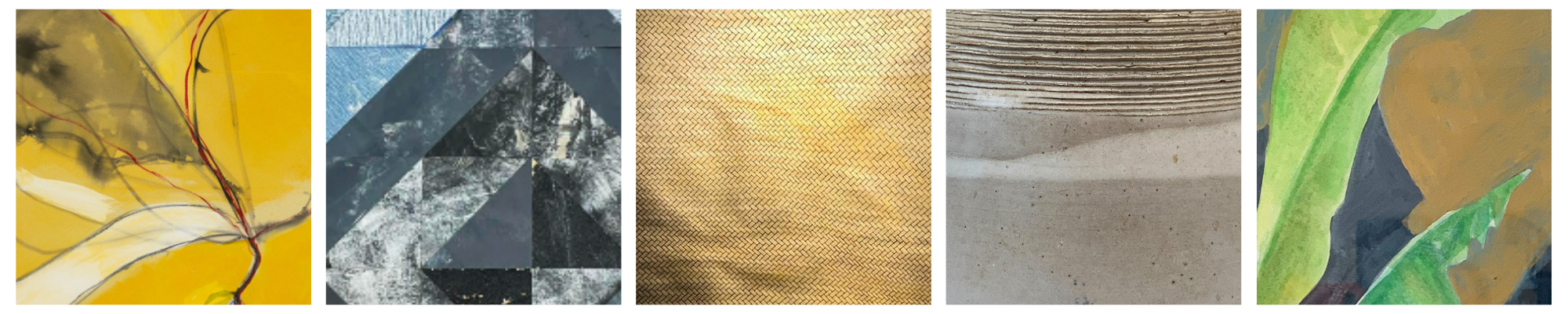
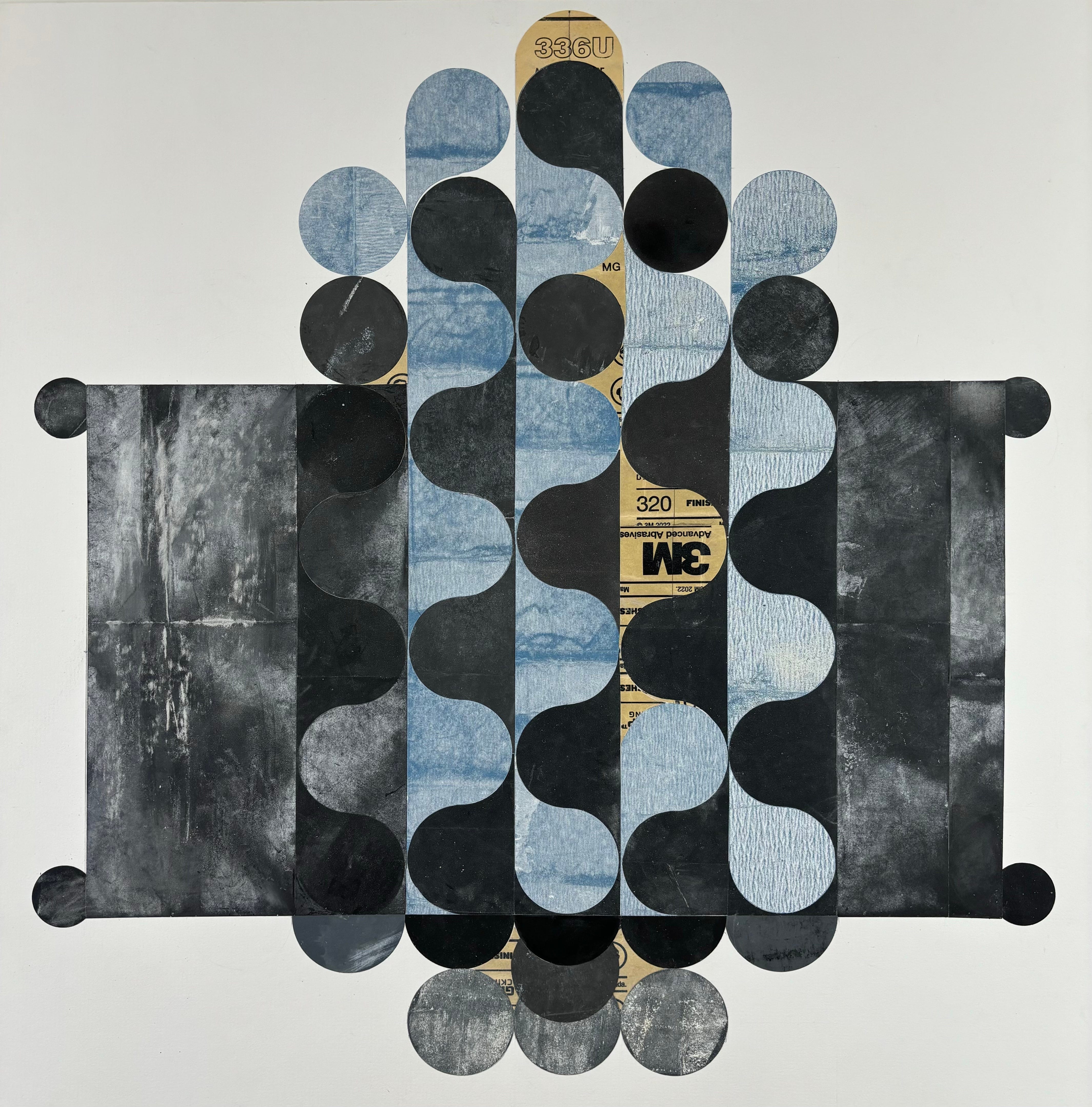
At the heart of this curatorial project is a dialogue between home as an idealized place and as a space marked by inherited culture and memory. Artist Gerardo Camargo confronts this strain through his work, which deeply engages with societal issues and community experiences. Honored as a Promising Emerging Artist by Mexico's National Council for Culture and the Arts, Gerardo’s collages incorporate materials sourced from local construction sites, not only reflecting the evolution of urban spaces but enhancing the invisible labor of the “mano de obra” (literally “hand of labor,” referring to the workforce) in the U.S. His pieces amplify the vital yet frequently overlooked contributions of immigrant workers to the built environment.
Similarly, Elmer Calata approaches home through a lens of cultural hybridity, blending urban influences from his native Philippines with the landscapes of Latin America and the United States. His works in ink evoke both rootedness and movement, carrying forward the textures of heritage and transformation. His works, exhibited from the Philippines to the U.S., Paraguay, and Nicaragua, are visual meditations on how home and identity shift with each new landscape we encounter. Elmer uses ink as a medium to signify permanence, contrasting with the fleeting nature of memories and transient experiences.
For Michael & Mary Hart, the concept of home is inseparable from partnership and legacy. This couple, self-taught ceramicists who shared a lifelong creative journey, infused their pottery with a commitment to family, craftsmanship, and life-long learning. For nearly 50 years, Michael and Mary transformed their home into a creative haven, using it as a space to create and share their art. They served as official ceramicists for prestigious institutions like The Metropolitan Museum of Art, but their impact extended beyond galleries and museums, enriching their community through collaborations with local organizations, schools, businesses, and churches.
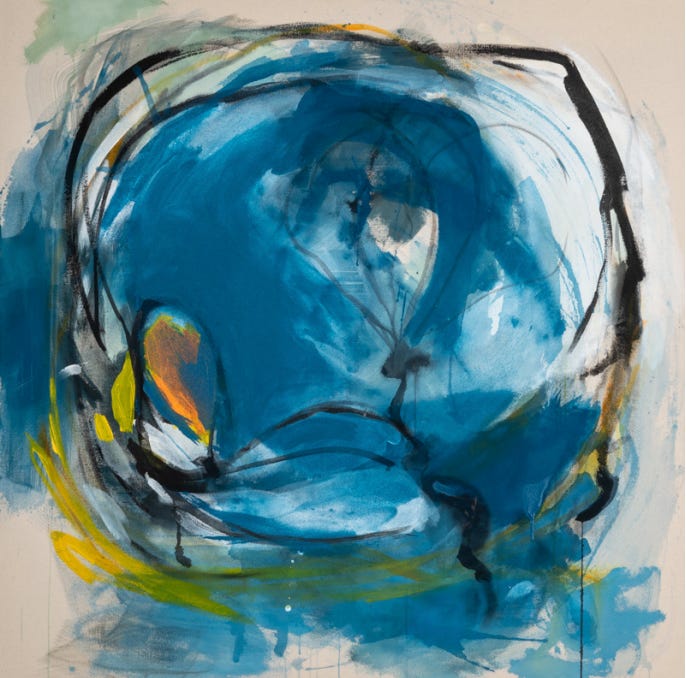
The emotional dimensions of home are also explored by Rebecca Perez, a DC-based artist of Puerto Rican heritage. Rebecca’s intuitive style reflects on trauma, motherhood, and healing, portraying the ways that personal and generational struggles (and fortunes) reverberate through family and community. Her work invites viewers into an intimate space where vulnerability meets resilience, challenging us to see the ways trauma shapes our understanding of ourselves and our surroindings.
Lastly, Yocelin Ramírez, who draws inspiration from her native Dominican Republic, captures the wonder of the everyday. Her work reflects her connection to tropical landscapes, architectural motifs, and cultural textures. Through her work, she highlights the relationship between ordinary objects and memory—individual and collective. With an impressive career that includes exhibitions in the U.S., Spain, Italy, and the Dominican Republic, Yocelin explores how home is built through the rituals and rhythms of daily life.
Sanctuary: Reflections on Home invites us to consider how stories, traditions, and even traumas pass from one generation to the next. These intergenerational exchanges contribute to a collective cultural memory that both enriches and complicates our sense of identity, as we carry both pride and pain. What do we preserve? What do we let go of? And how do we reconcile these pieces into a coherent sense of self and place?
Each artist offers their unique perspective, yet together, they create a collective space for visitors to reflect on their own experiences and perhaps find common ground. In this way, the exhibition itself becomes a shared “home” for all who interact with it. As people engage with these works, they’re invited to consider how the spaces we inhabit shape who we are, while the imprints we leave as we move through life transform and redefine these environments in turn. It’s this ongoing exchange that reveals the extraordinary moments that arise from the day-to-day, and reminds us of our power to influence and reshape the spaces we call home.